Sharjah
Sahara Centre Basement Floor - Bank Entrance - Sharjah - United Arab Emirates
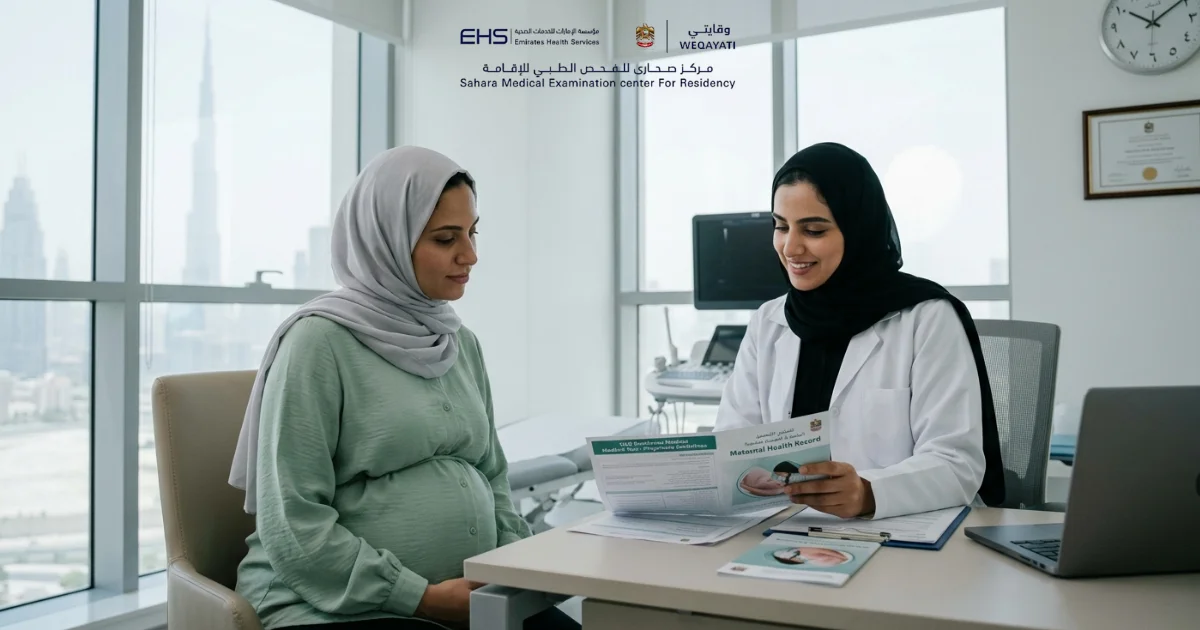
You have just found out you are pregnant. You are also in the middle of — or about to begin — your UAE residency visa process. And one question is circling your mind: Do I still have to do the medical test? Is it safe for my baby? What happens with the X-ray?
You are not alone in asking this. It is one of the most frequently searched questions among pregnant expats and their sponsors in the UAE. The reassuring truth is that the UAE's medical system has clear, well-established protocols for pregnant applicants. Thousands of women complete their medical test for visa in Sharjah and other emirates every year — safely, officially, and without complications. This guide walks you through everything from the first trimester to the week of delivery.
Let us address the most fundamental concern first: pregnancy is not a ground for UAE residency visa rejection.
The residency medical test screens specifically for communicable diseases — tuberculosis, HIV, hepatitis B, hepatitis C, and syphilis. Pregnancy is not a communicable disease. It is not listed anywhere in UAE health authority policy as a disqualifying condition, and it does not appear on any rejection checklist.
You have the same legal right to apply for and receive a UAE residency visa as any other applicant. Your pregnancy does not change your eligibility, trigger additional scrutiny, or give authorities grounds to refuse your application.
If you discover you are pregnant during the visa process, you are not required to disclose this to your sponsor or the immigration authority — though you will need to inform the medical centre so appropriate precautions are in place during the examination. At Sahara Visa Medical Centre, our team handles pregnant applicants regularly and approaches each case with clinical care and sensitivity.
Understanding the standard components of the examination helps clarify exactly what changes — and what does not — when you are pregnant.
The UAE residency medical examination at a licensed visa medical fitness center in Sharjah consists of three core components:
A standard venous blood draw screening for HIV, syphilis, hepatitis B, and hepatitis C. This is entirely routine during pregnancy — blood tests are performed constantly during antenatal care. A single additional draw for visa purposes poses zero risk to mother or baby.
This is the component that causes the most concern for pregnant applicants — and understandably so. It is used to screen for tuberculosis and other respiratory conditions. We address this in full detail in the section below.
A general health assessment covering blood pressure, pulse, weight, and a brief review of your medical history. For pregnant applicants, the doctor will note your pregnancy and gestational stage, which informs how the rest of the examination is conducted.
This is what most pregnant applicants are here for. Let us address it clearly.
A standard chest X-ray delivers approximately 0.1 millisieverts (mSv) of radiation. The threshold at which radiation is considered potentially harmful to a developing foetus is estimated at 50 mSv — meaning a single chest X-ray delivers roughly 1/500th of the dose considered concerning.
The World Health Organisation, the American College of Obstetricians and Gynecologists, and the Royal College of Radiologists all agree that a single chest X-ray with proper abdominal shielding poses negligible risk during pregnancy.
That said, licensed UAE medical centres take a precautionary approach for pregnant patients — which is exactly the right thing to do.
What you must do: Inform the medical centre that you are pregnant before the examination begins — ideally at the time of booking. The team will advise on the right approach based on your trimester and health status.
This is the most critical period of foetal development. The precautionary principle is most strongly applied here, and many medical professionals recommend requesting a chest X-ray deferral during this stage.
The second trimester is generally the most comfortable time to complete the examination. Nausea has typically eased, energy levels have improved, and the risk associated with a shielded chest X-ray is considered minimal by most medical guidelines.
By the third trimester, travelling to a clinic, sitting in waiting areas, and managing the logistics of a medical appointment can be genuinely physically demanding. This is where the Home Visit Service becomes not just convenient but the most sensible choice for many applicants.
Yes — and for many pregnant applicants it is the most practical option.
A certified medical team visits your home at a time that suits you, conducts the blood draw and physical assessment, and handles all documentation. For women in the second and third trimester, avoiding long clinic visits, waiting areas, and unnecessary travel is a genuinely sensible choice — not a luxury.
The chest X-ray component, if required and not deferred, would be completed as a brief separate visit to the clinic. The team will advise you on the most comfortable and efficient way to arrange this.
The resulting Medical Fitness Certificate from a home visit during pregnancy is identical in legal standing to any clinic-issued certificate. There is no distinction in how immigration authorities treat it.
For a New Visa Application:
For a Visa Renewal:
Additionally recommended for pregnant applicants:
Having your OB/GYN letter ready before your appointment is one of the most important steps you can take. It is the primary document that supports a chest X-ray deferral request.
This is a question many women ask quietly and deserve a clear answer to.
Pregnancy will be noted in your medical examination records because it is clinically relevant to how the examination is conducted — specifically the chest X-ray decision. However, pregnancy is not submitted as a finding to the immigration authority and is not treated as a disqualifying condition in the Medical Fitness Certificate.
The certificate submitted to immigration focuses only on communicable disease screening outcomes. Pregnancy does not appear as a negative or abnormal finding in that assessment.
If you have specific concerns about what appears on your report, speak directly with the medical officer before the examination begins.
Yes — in many cases this is a practical option worth discussing with your sponsor and the medical centre.
If your visa has a grace period or your entry permit allows sufficient time, waiting until after delivery simplifies the process considerably. Post-delivery, the standard examination proceeds without modifications, and neither the pregnancy nor the birth affects your visa eligibility.
If your visa deadline does not allow for a delay, completing the examination during pregnancy with appropriate precautions is equally valid. Do not let a deadline create unnecessary anxiety — the process is well-managed at a centre experienced in handling these cases.
Once your baby is born in the UAE, they will need to be registered and sponsored on a residency visa. Newborns are generally exempt from the standard medical examination at the time of initial visa registration. However, as the child grows and their visa is renewed, they will be required to complete the standard medical fitness test.
For help with typing and submitting your medical application — for yourself post-delivery or for your newborn — the team can guide you through the full process.
Your residency visa involves several interconnected steps. Depending on your situation, you may also need:
Being pregnant does not mean your UAE residency process has to be complicated or stressful. The UAE's medical system has clear, humane protocols for pregnant applicants — and a licensed medical examination centre in Sharjah applies those protocols every day.
Whether you proceed with a shielded X-ray, request a deferral, use the home visit service, or wait until after delivery — there is a clear path forward. The key is understanding your options, preparing your documentation, and working with a team that handles these cases regularly.
A: No. Pregnancy is not a disqualifying condition. The medical test screens for communicable diseases only, and pregnancy is not among them.
A: A shielded chest X-ray delivers a very small radiation dose — far below the threshold considered harmful during pregnancy. With proper abdominal shielding it is widely considered safe. If you are in your first trimester, you can request a deferral with your OB/GYN's letter.
A: Yes. The blood test and physical examination can be completed through the Home Visit Service. The chest X-ray, if required and not deferred, would need to be done as a brief separate clinic visit.
A: The second trimester is generally the most comfortable and least complicated. The home visit option makes the third trimester significantly more manageable.
A: Not always mandatory, but strongly recommended — especially if you want to request a chest X-ray deferral or have pregnancy complications the team should know about.
A: No. The Medical Fitness Certificate submitted to immigration focuses on communicable disease results only. Pregnancy is noted internally as a clinical factor but is not disclosed to your employer or sponsor.
A: Yes, if your visa timeline allows. Discuss this with your sponsor and the medical centre based on your entry permit validity and processing deadlines.
A: Call +971 56 402 8010, email sahara.mec@emitac.ae, or visit ehsscreening.com/contact-us to arrange a clinic appointment or home visit.

John Relova drives EHS (Environmental, Health & Safety) operations in Dubai via EMITAC Healthcare Solutions and is active in promoting workplace safety culture within the region.
Get In Touch With Us
Medical Examination Centre for Residency - Sahara Centre


Mail Us
sahara.mec@emitac.ae